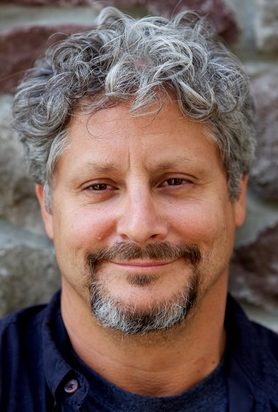
Remarks to the Montepaone chapter of the Associazione Nazionale Servizi, June 20, 2026
When I first came to Calabria 16 years ago one of the first things I noticed was its beauty.
The mountains reminded me of the Rocky Mountains in Colorado, a western state in the U.S., where I had lived for many years.
I had come to Calabria with my older brother Saverio, and we loved meandering through the small ancient towns.
Unlike Colorado, however, Calabria also had the sea. That combination was the first that inspired me to think about coming here to live.
My ancestry goes back to both Calabria and the Abruzzi.
During that trip with my brother, we first traveled to the small town of Montenerodomo in the Abruzzi, from where my mother’s father, Luigi D’Orazio, left in 1919, after marrying a young woman with whom he grew up, Grazia Rossi, my grandmother, whom he called his “best friend.”
My father’s grandfather first came to America in 1902 from San Vito sull’Ionio.
His son, Vito, my grandfather, was born in the United States, and he fathered eleven children, including my father, Saverio. I was named Victor because, according to my mother Philomena, that was the name Vito’s wife Teresa called him.
My mother’s family and my father’s family lived in the same Italian-American neighborhood just south of Philadelphia, in a town called Crum Lynn, where they met and married.
After my two careers ended, one as a journalist, the other as a professor, I chose to retire in Calabria.
One reason, as I mentioned, was Calabria’s primitive beauty: mountains and small towns and the sea.
The most obvious other reason was heritage, the pace was slower than the United States, and the cost of living was at a level I could afford. Another reason was its history: as a history professor and writer, I loved Europe and Italy, its deep, ancient culture and history, and wanted to experience what it was like.
I have not been disappointed.
I have found that Calabria also is a state of mind.
Many of the people’s attitudes I have observed here remind me of the neighborhood and family where I grew up, their bitter distrust of authority, and their intense love of family.
I had to adapt to its slower pace, its easygoing way of doing things – which I like very much – and to things I don’t like, the slowness of repairing roads and, this past year, for example, not fixing up the beaches and lungomare after this winter’s cyclones.
At times – except for smartphones and mechanical devices – it feels as though I have stepped into a bureaucratic time machine.
I can only speak from living here for a year and a half: the experience of buying property, hiring workmen and craftsmen to help repair or get my place up to date, and dealing regularly with a bureaucracy that seems much slower and less professional than the one I had dealt with in the U.S.
I also am at a great linguistic disadvantage, which is of course my fault.
Although I took Italian language lessons in America before I came here, and took some after I arrived, I can only speak fluently in English.
This has been a great disadvantage to me working with people, dealing with phone calls, and with all the legal things I must do, including renewing my permesso soggiorno, and perhaps worst of all, trying to get a driver’s license.
And, in communicating with you today.
I’m glad I didn’t realize how hard that part was. But I will learn to be fluent, eventually. I’m not planning to go elsewhere any time soon.
I do not know what you think about foreigners living among you, even ones who are grandsons of people who moved away from here more than a century ago to raise families in a very different part of the world.
I do know I like it here, and think some kind of integration will be necessary to make me feel a part of something much bigger – and ancient – than I ever felt in the United States.