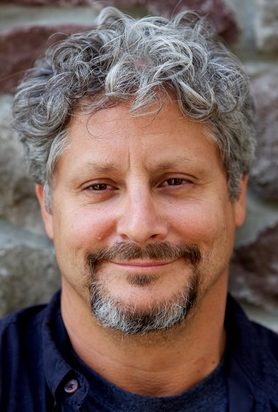
By Victor Greto
His mother’s face had grown drawn and tight, paper-thin, bony. Golden-brown wrinkles etched in still-creamy skin, he could make out the hard outline of her skull. She stooped when she walked, loping side to side as she went from the bedroom or living room to the kitchen, wiping dishes off slowly and deliberately, her deep-set eyes looking perfunctorily out the window, then back to the dish.
He returned home again, only seven months after having spent a week with Grace while she recovered from hip surgery. Then, he had uneasily slept in his mother and father’s old bedroom, while she slept in a hospital bed in the den. He listened for any sound, a cry of pain, his name. His father had been placed in a nursing home. The two boys who lived nearby, Anthony and Vincent, realized their mother could no longer care for him. The best place for their old man was a home, they had decided, so Grace could just take care of herself. Then, the idea went, as soon as she was able, he’d come home.
It at first seemed strange to observe how Grace acted after the surgery, how she had transmuted into helpless anger the pain she felt in her hip, the arthritis that raced through her joints and the trembling Parkinson’s disease. But it became easy to figure out why. Grace had become bitter that, after fifty years of daily exercise, she had been felled by a hip. Before hip surgery, she had convinced herself she was beating the disease and arthritis through exercise, medication and a daily dose of cod liver oil. But now she could no longer exercise without feeling needle-like, gnawing pain. It wasn’t fair, she repeated to Nick that week he had cared for her; I did everything right and this is what I get. I’m a big baby, Nicky, I know, but I don’t deserve this.
When Nick returned to his mother in January of the next year, at the big house where she lived now by herself, it was partially to convince himself that she would be okay, that she had gotten past her initial despair. Grace had developed a new way of looking, peering, into your eyes from a point in space below your line of vision, looking up and over in an acceding, plaintive stare, like a child who had recently been punished and was now asking to be forgiven. No matter how often Nick smiled and forgave, Grace peered. After a while, Nick got used to it and closed his eyes as he drew near her, gently squeezing her small body with his arm.
When Anthony picked him up at the airport, he had told Nick that their father was now in the hospital. This was news to Nick, who had just found out that his old man also had been diagnosed with Parkinson’s disease. Now, Anthony told him, there was something wrong with his kidneys. There had been something wrong with his kidneys for at least two weeks, he said, but their father never told anyone. “You know,” Anthony said, “his dad died of a kidney infection.” When Nick’s grandfather died fourteen years earlier, he had been in Colorado. He could only shrug that he didn’t know.
Nick had last seen his father during the May trip, when he and Anthony visited him several times at the nursing home. He looked much too old and defeated for sixty-eight, his hair completely gray, shoulders slouching, hands in his pockets; dad looked at him with a joyless smile that showed tiny-square false teeth. His skin hung in folds; it had played the accordion rhythm of his illness for forty years. For the last two years, it seemed as though he was sick all the time, unsteadily walking through a manic, drug-inspired haze.
During that week, his father kept calling Grace: Can I come home yet? How you feeling? I hate this goddamn place. You don’t want me to come back, do you? I love you.
Anthony and Nick brought cigarettes and a hoagie each time they visited him. To get away from the smells of the rooms and the corridors of the nursing home, they took him on the elevator downstairs to the break room and sat around an empty, brown table. Anthony bought him a Sprite to drink while he ate hungrily, sloppily, ravenously. “They feed me nothing but shit here,” he’d say between bites. When he was done, he’d sit back in the colored plastic chair with a sigh: “Jesus, I wish I could tell you how good that tastes.” Then, after looking at both his sons, he couldn’t help but laugh at himself and shake his head. “How’s your mother?” “Getting better,” Anthony had chanted. The rest of the visit concerned insurance bills and who neglected to visit and why his daughters-in-law hated him, ending with the plaintive, When can I go home?
Anthony had grown old, too. He wore a resigned look, the way Nick had looked during and just after he divorced Dorothy and Annie six years earlier. Anthony woke up, worked, and went to sleep tired, and his mouth remained grim even when he laughed. He was married, of course, that same year Carl married, and had two children, girls. Aside from his father, they centered his world.
As during the previous May, Nick slept in his mother and father’s old bedroom; she lay in her hospital bed in the den. That first evening, Nick brought his father’s scrapbook to bed with him. He went through each page, meticulously reading the glorious headlines, looking at the grainy and yellowing pictures of his dad, much younger than Nick was now, for a hint of himself. Maybe the eyes, a certain turn of the head and, if the shadow was just right, a profile. But his dad’s full poses contained everything Nick was not: running with the football, right arm outstretched and ready to push players out of the way; at the plate, his bat and the ball a blur of frozen motion, his face fixed in concentration; jumping for a lay-up, his eyes looking both through and over the basketball toward the net.
He awoke in the early morning hours to the sounds of his mother laughing. He tiptoed his way out of the bedroom toward the den. “Are you okay, mom?” he asked lightly, his hand on the door. “Yes,” she said, “Was I laughing?” “Yes,” Nick answered.
“What’s so funny?” she asked.
He cooked her breakfast in the morning, scrambled eggs and two pieces of toast. That’s when the phone rang. Nick handed it to his mother.
When she gave the phone back to him, she peered at him from below the phone that no longer was in her hand. “I’ve been waiting for that call,” she said. His father was dying.
It had started snowing that morning and the halls of the hospital were as bright and white as the snow already plowed against the sidewalks. You could see everything in antiseptic detail.
Nick’s father lay crumpled on the hospital bed gasping. Because the false teeth he’d been wearing for nearly twenty years had been removed, his mouth pursed sunken; the prominent outline of his skull quivered mechanically. His hair, a stark white for decades, had turned an ashen gray, nearly transparent, sweat-moussed toward a point. His facial skin, a gummy charcoal, pocked with a gray five-o-clock shadow. His large chest heaved with each breath, air whistling sharply through his lungs, exhaling and inhaling abruptly through his mouth. Every time Marco breathed, it was as if he had been holding his breath for minutes at a time, or had just surfaced after swimming hard. But the eyes were half-closed; you could only see the whites.
Nick had arrived with his mother and brother Vincent (who had driven them there) less than an hour after they had received the call. Anthony arrived shortly after, dressed in white-spattered painter pants. The three brothers had not expected to see their father that way.
Grace’s face, still creamy taut in the white light, took on a stoic, chiseled expression. Nick found her a chair, and she sat beside Marco, alternately rubbing his chest and forehead with her hand, murmuring, “It’s okay, Marc, it’s okay, we’re here,” at short intervals.
Marco did not have the room to himself. A much older man lay wheezing behind a shower-curtain divider. He occasionally made noise wanting a nurse, to go to the bathroom. He needed a walker and once, while going into the bathroom door just a yard from the foot of Marco’s bed, the back of his gown drooped open to show an old and wrinkled ass drooping even further.
Just outside, in the corridor, it was business as usual; the stark lights shone on Nick and Vincent and Anthony as it did on the cracked tiles and speckled linoleum floors. Hospital workers shuffled back and forth, wheeling patients on gurneys or wheelchairs, talking about dates and trips and shifts. Anthony finally found a chair and sat next to his mother, staring at his father motionlessly, with wide, unhappy eyes. Grace continued her mantras and the regular movement of her arms and hands on Marco’s body.
After only fifteen minutes, Marco began to breathe more irregularly, stopping for seconds at a time, then jolting himself back into breathing.
Nick stayed in the corridor, pacing. Vincent stood by the door with his arms crossed. He often talked to the nurse, who shook her head.
Fredo was the first of Marco’s brothers to arrive. Older than Marco by a couple of years, he was much shorter, compact, even muscular. He looked angry as he walked toward Vincent, ignoring Nick.
“What the hell,” he said first, looking at Vincent’s face. “How long has this been going on?”
“We just got the call this morning,” Vincent said, then explained about his father’s kidney infection.
From the back, Fredo looked like a caricature of Marco: the rounded shoulders and meaty arms but, even more so, the profile as he turned to look into the room, his nose, soft gray eyes, even the tight gray curls of his hair; everything, though, was in miniature, and angrier.
When Fredo left the room his eyes were wet. “How long has he been like this?” he asked.
Nick shrugged and looked into his father’s eyes. “I just got here last night. I don’t know.”
Fredo’s face grimaced, lips pressed together, and his head shook as he turned to talk to Vincent.
Nick walked over to the door of the room and placed his forehead against the jamb. With his left eye he saw his father gasping on the bed, his mother and Anthony sitting and looking at Marco; with his right eye he saw the stark white of the hospital corridor, both Vincent and Fredo talking with arms folded, shaking their heads in unison.
Nick just couldn’t help it. He thought of the movies and novels and the dozens if not hundreds of times he had seen or read of this same sort of event playing out in front of him, and he detached, a fly on the wall. He was in it now and it seemed as surreal as the white light of the corridor on the one hand, and the stoic expression of his mother watching her gasping husband on the other. The jamb, cold against his head, comforted him. The last thing he wanted touching him was human flesh; even from Grace, he felt removed; certainly his father, whose flesh would soon grow as cold as the jamb, he wanted nothing to do with. Nick tried to think of each of the twenty years since he’d left home, like calendar pages torn away, but he failed. He could only remember his old man in his forties, when Nick was a teenager; even then the images were bland, consisting only of smiles, snores, cigarette smoke curling around dyed black hair, the old man leaning back in his lounge chair watching television. The rest was absence and silence and himself. Nothing had changed.
He heard the echo of his father’s breathing, the trill of his mother’s words, the pacing and solemn tones in the corridor. Cross-eyed, he saw only the white jamb.
Then, out of the corner of his right eye, he saw his uncle Gene.
Dressed in a soft, tan coat, checkered shirt, brown corduroy pants and shiny brown shoes, Gene walked hurriedly in front of a younger woman and a young boy.
“Nicky, Jesus Christ,” he said, putting his thick hand out to shake, placing his other on Nick’s shoulder. “Your dad,” he said, shaking his head. Then, “Long time no see.”
Gene had grown even fatter, older, his hair a wispy gray-white. “I want you to meet my wife,” he said.
Nick knew Gene had divorced his first wife Violet years ago. This wife, about Nick’s age, with dirty blond hair and small features, shook his hand gently.
“And my boy,” Gene said, whose eight-year-old face looked like an angular and thin caricature of his dad’s.
Gene could not stop talking and moving, walking in and out of the room where Marco lay, murmuring to anyone who would listen about his surprise at his older brother’s condition. He continually looked around for faces with which to nod, shake, commiserate.
He stopped in front of Nick as Nick leaned outside the room against the white wall with arms folded and head hanging.
“You look great,” Gene said, smiling. “I haven’t seen you in years. Jesus, I remember you being a muscular son-of-a-gun. Arm wrestler. Remember how you’d challenge all of us to arm wrestle, and you’d beat all of us? Remember that?”
Nick stared in disbelief. “No,” he said. “I don’t.”
“Well, you did,” Gene insisted. “Back when Jack was staying at your house. You remember that, don’t you?”
“Hey,” Gene said abruptly, “guess how old I am. Do I look it?”
Nick shook his head. “Fifty-something, I guess.”
“Fifty-six,” Gene said, grinning. “How do I look?”
“You look just fine,” Nick said, unable to look anymore.
“So do you,” Gene babbled. “Christ, you must be thirty-six, thirty-seven, right?”
“Something like that,” Nick said. Suddenly, he couldn’t help but smile at Gene, who kept grinning as he spoke.
“Time flies,” Gene whispered, winking. “It heals all wounds, and then it kills you.”
“That’s the truth,” Nick said, getting into the mood. He flexed his ears and heard his dad’s gasping on the other side of the wall, then stared into Gene’s face. There was nothing of his father there, he thought happily. It was a salesman’s face and, to his surprise, Nick felt pity for it.
Gene was pushing himself up and down on his toes, standing there in front of Nick, retaining a smile that grew thinner by the second.
“I loved Marco,” he said, his voice cracking.
Nick could only nod and press his lips together. Gene soon turned away and strutted to Fredo, whom he hugged.
“I know how much you loved him,” he heard Gene’s voice cry. Gene suddenly burst into tears and gripped his older brother tight. His sobs echoed in the hallways. The hospital staff walked with heads bowed.
Nick turned away and saw Anthony come out. Anthony watched the two brothers hug each other. He looked at Nick. “Mom wants us to come in and say goodbye to him,” he said. He walked over to Vincent.
Nick walked into the room. His mother still sat and lightly massaged his father’s chest, then dabbed his forehead with a tissue.
Grace introduced them to Marco before each of them bestowed a kiss. Vincent went first, leaning over his mother to kiss his father’s forehead, even caressing the side of his face. Then Anthony, who couldn’t keep his hands away from his father’s large arms, kissed him. “Nick just flew in last night,” Grace said to Marco, who continued to gasp and look up into his head. Nick, almost frightened, bowed quietly over his father’s face, kissed his forehead lightly, and said, “I’m sorry, dad,” but did not touch him.
“Like a baby’s kiss,” Grace said in a disapproving tone. Nick did not respond. He pulled himself up and walked out of the room.
He didn’t even know I was there, Nick responded to his mother in his head, once he was out of the room and after he had closed his eyes from the bright light of the corridor. He repeated, I’m sorry, dad, to himself, without sound, but with his lips moving. He didn’t even know I was there.
When Uncle Chris and his wife, Fatima, arrived, Nick had dug his hands in his pockets, repeating to himself how sorry he was to the floor. They looked solemn as they weebled into Marco’s room with only a nod at Nick.
In spite of himself, Nick watched them in meaningless disgust. He didn’t care, he knew, but it was that word, solemn, which passed through his mind as they passed, that bothered him; they reeked of it, and it disturbed him that he couldn’t feel the things they seemed to feel, or live the way they seemed to live, as though they had buttons they pushed on themselves that said: Act this way today, for this event, for this contingency, for this role, for this whatever. Nick was a rank amateur, even while his old man gasped his last breaths. It was too late to change. Then again, it had been too late to change all along. He was what he was because that’s what he was, and the confirmation of what he was blared at him with the bright light of the hospital corridor.
But then he thought, even now, as his father lay dying, he busied himself with what he thought he was, and he felt ashamed, unable to give even this final time to his father. No matter what his old man had done or failed to do in his life, no matter how he treated Nick, or, more to the point, how he had not treated Nick, all that just didn’t matter because his old man was his old man, period. People are the way they are and there’s nothing you can do about it. Like Gene, Chris, Fredo, Vincent, Anthony, Grace. It was all the same. There were degrees, maybe, but right now Nick wasn’t up to doing it, taking their respective temperatures, then measuring each one out to see who was worthy of his attention or compassion. He felt illimitable sorrow for everything that was alive. He wasn’t giving up; it just seemed like he was seeing them all together for the first time. They were so pathetic there in the hospital room, just as they were so pathetic everywhere in the world. Not just people, but animals and plants and minerals and galaxies. Like whispered shouts, he thought, everything was reaching out and up for life and attention and comfort. And Nick, he realized, pitying and seeing himself on the same plane as everyone and everything else had never been there to give it, not to anyone.
Nick looked around and saw Gene’s wife and child at the end of the corridor, sitting on cushioned seats, staring off at the wall. She smiled glumly when she noticed his gaze.
He looked over at Fredo, the only brother of his father’s who remained in the hall, and could not help but see his father, and he walked over to him and Vincent.
“You should have seen your dad,” Fredo was telling Vincent, “he was the best goddamn baseball player ever. Ever.” His eyes welled, he walked to the entrance of Marco’s room, and he moaned, “Marco! Marco!” softly; the sound of the words lifted through the heavy air of the corridor.
In the room, Chris, Fatima and Gene were discussing whether they should call a priest for the last rites. Gene said he knew how to get ahold of a priest on short notice. He reached over, past Anthony and Grace, for the phone. It was barely out of reach, and Anthony gave it to him. “Dial this number,” Gene said, and Anthony, his eyes lowered, dialed the number his uncle recited to him.
Everything now became a series of solemn whispers. Huddled around Marco, his brothers and wife and sons were there to simply wait for him to stop gasping.
Nick waited in the hall when the priest arrived to give Marco the last rites. “Is that something dad would have wanted?” he asked Anthony.
“Son of a bitch never got any breaks,” Fredo said, walking out of the room and looking at both Nick and Anthony. “Not a one.”
Nick heard the whispers of the priest, saw his solemn motions, and looked at Fredo again. “He had us,” Anthony said.
Solemn takes a long time, and the priest must have been in Marco’s room for half an hour. Nick could only pace after Chris and Gene and Fredo and Fatima walked out of the room with the priest afterward, thanking him.
When they left, Anthony went back in to sit next to his mother.
Numb to the babble of his uncles and aunt in the hallway, Nick closed his eyes for a second. He turned to see Anthony, and saw nothing but his eyes, bloodshot and large. “Dad just died,” he said in disbelief.
Nick walked in and saw the still body of his father, then the people who began gathering around him, still wearing their heavy coats and holding their gloves in their hands.
“Exactly one-fifty-eight p.m.,” he heard Chris say. Chris was looking at his watch, squinting, barely the crease of a smile on his face. “He’s at peace now,” he said, quickly looking around him, sure. “He’s better off.”
Everyone stared at the body. Then they filed out, whispering to Anthony and Vincent about arrangements.
When everyone had gone into the hallway, Nick leaned against the doorway to watch his father’s body. His eyes were dry and he wondered what his father was thinking as he lay there gasping, perhaps knowing who was there surrounding him. He wondered if he had been thinking or dreaming a fantasy, of being sixteen again and playing ball and hearing Grace cheer him on. Or was he thinking about his family, the boys he helped create? Were they in his thoughts? Or, had he no thoughts at all, just the tightening in his chest that begged for air?
Anthony walked into the room and could not stop touching the body. “Getting cold already,” he said. Nick could hear just a few of them out there, milling in the corridor. Then silence.
“Let’s stay here for a few minutes,” Anthony said. “I don’t want to leave him alone like this.”
Nick leaned against the wall and watched his brother touch his father’s arms. They stayed for thirty more minutes before the nurse came in. A middle-aged woman, she looked at Nick, and said, “Just tell me when you’re done. I need to take care of him.”
Anthony looked up. “We’re done,” he said.
The nurse looked over at the body of their father and looked at Nick.
“He was a good-looking man,” she said.
© 2026 Victor Greto